Highlights

  • Martin Blackledge elected Fellow of the International Society of Magnetic Resonance

    Highlights

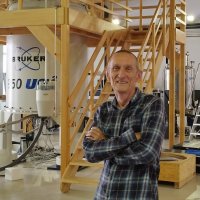
    We warmly congratulate Martin Blackledge, CEA Research Director at the Institut de Biologie Structurale (IBS), on his election as a Fellow of the International Society of Magnetic Resonance (ISMAR). This international distinction recognizes Martin Blackledge’s major scientific contributions to the field of magnetic resonance, and in particular his pioneering work on the study of intrinsically disordered proteins using NMR spectroscopy. His research has contributed to the development of (…)
  • When alternative splicing reprograms protein interactions

    Highlights

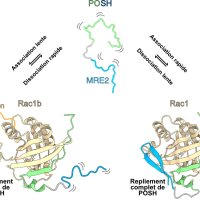
    Scaffold proteins play an essential role in cellular communication by controlling the assembly of multiple partners involved in signalling pathways. In the JNK pathway, the intrinsically disordered scaffold protein POSH is involved in the initiation of apoptosis, a process triggered by its binding to the small GTPase Rac1. Researchers from the IBS (SIGNAL group), the IAB (A. Palencia), and the ENS Paris (G. Bouvignies) have combined NMR spectroscopy and X-ray crystallography to study the (…)
  • Martin Blackledge, FEBS National Lecturer Award

    Highlights

    Congratulations to Martin Blackledge, group leader at the IBS, on being selected as a FEBS National Lecturer! This prestigious distinction was created to celebrate the 40th anniversary of the Federation of European Biochemical Societies (FEBS). It recognizes both scientific excellence and a significant international reputation in biochemistry or molecular biology, offering outstanding researchers the opportunity to deliver a plenary lecture at a scientific congress organized by a FEBS (…)
  • EROS, the hidden hero of antimicrobial defense

    Highlights

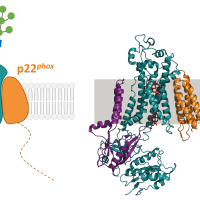
    Our immune system relies on specialized cells, such as neutrophils and macrophages, to detect and eliminate invading microbes. One of the most powerful weapons used by these cells is a multicomponent molecular machinery known as NADPH oxidase. Upon activation, this enzyme generates reactive oxygen species (ROS), highly reactive molecules that contribute to the destruction of bacteria and fungi engulfed by immune cells. A key component of this molecular machine is a glycosylated membrane (…)
  • Structural snapshot of biological nitrogen fixation in hell

    Highlights

    Although nitrogen gas composes up to 78% of Earth’s atmosphere, its triple bond makes it hard for organisms to use. To do so, microbes perform the remarkable reaction of nitrogen fixation—converting N₂ into the fertiliser and biofuel ammonia, while participating in Earth’s nitrogen cycle. The enzyme nitrogenase performs this reaction and exists in different forms depending on the metal in its metallocofactor: molybdenum, vanadium, or iron. A study published in Nature Communications studied (…)
  • Nicola Galvanetto, winner of prestigious ERC Starting grant

    Highlights

    The European Research Council (ERC) has just awarded a 2026 Starting Grant to Nicola Galvanetto, a researcher at the Grenoble Institute de Biologie Structurale (IBS/Protein Dynamics and Flexibility by NMR Group), for his ’INTERFACES’ project in single-molecule biophysics. This project aims to provide new insights into the molecular mechanisms underlying neurodegenerative diseases, while also revealing fundamental principles governing biomolecular interfaces and the organization of living (…)
  • How the environment shapes protein dynamics

    Highlights

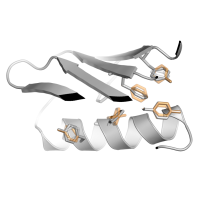
    A study published in Nature Chemistry investigates how the environment reshapes protein conformational energy landscapes using the model protein GB1. In this project, led by Paul Schanda’s group at ISTA in collaboration with the Synchrotron group at IBS and Christophe Chipot’s group (CNRS/University of Illinois), the researchers compared its dynamics in solution, in a crystal, and when bound to its partner IgG. Using NMR, they showed that some buried aromatic rings flip nearly a thousand (…)
  • A dual-function protein orchestrates flowering

    Highlights

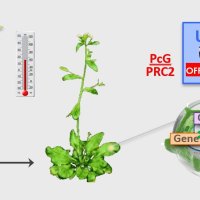
    The development of multicellular organisms depends on a delicate balance between gene activation and repression, which is controlled by epigenetic marks* on chromatin. In plants, this regulation is essential for coordinating key developmental stages, such as flowering. For the first time, IBS researchers, in collaboration with the Cell & Plant Physiology Laboratory, the iGReD and the Institut Curie, have demonstrated that the ULTRAPETALA1 (ULT1) protein performs a dual role as a gene (…)
  • Rahman syndrome: when chromatin fails to compact

    Highlights

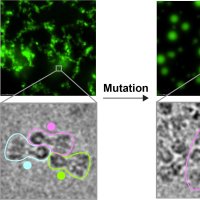
    Rahman syndrome is a rare genetic disorder characterized by neurodevelopmental defects and distinctive facial features, with skeletal or cardiac abnormalities in some patients. A new study published in Nature Communications by an international team of scientists from IBS, IAB, IGBMC and research institutes in Bulgaria, Turkey and the United States reveals that the mutation responsible for the disease impairs the function of linker histone H1.4, a protein that helps compact DNA inside the (…)
  • A novel tubular architecture sheds light on bacterial respiration

    Highlights

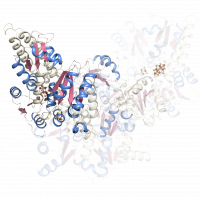
    How most living organisms couple their metabolism to respiration Respiration lies at the heart of energy conversion in most living organisms. It relies on electron transfer chains located in the membrane, where small molecules called quinones act as electrochemical shuttles. Among the molecules fueling these respiratory chains, NADH plays a central role. Produced by many metabolic reactions, it must be reoxidized for the cell to continue functioning. This step is carried out by NADH (…)
  • Ronald Rios-Santacruz, IBS Young Scientist 2026

    Highlights

    The 2026 IBS Young Researcher Award has been presented to Ronald Rios-Santacruz, whose thesis defended in 2024 was supervised by the Dynamics and kinetics of molecular processes Group at IBS. Ronald completed his MSc degree in physical chemistry at the University of Strasbourg from 2018-2020. In september 2020 he Joined the IBS where he did his Ph.D. studies in Biophysics with CEA funding, under the supervision of Drs. Martin Weik and Giorgio Schirò. His doctoral research focused on the (…)
  • Activation and modulation of complement by the Fc core of IgM

    Highlights

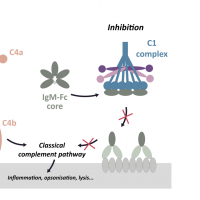
    Immunoglobulin M (IgM) are oligomeric antibodies that constitute the first line of immune defense, linking antigen recognition to the activation of inflammation. In their full-length form, activation of the complement system though binding of the initiating molecule C1q requires prior antigen engagement via Fab domains. In contrast, the contribution of their core, the constant fragment (Fc), remained poorly defined. In a study published in FEBS Journal, IBS researchers evaluated the (…)
  • Bacterial virulence factors as promising targets for human monoclonal antibodies

    Highlights

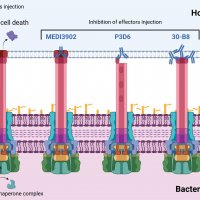
    Superbugs are drug-resistant microbes causing about 700,000 deaths annually, potentially rising to 10 million by 2050. Pseudomonas aeruginosa is a major hospital-acquired multidrug resistant pathogen, especially dangerous for immunocompromised patients. The World Health Organization lists it as a critical priority pathogen, highlighting the urgent need for new drug targets and therapies. Because of its key role in bacterial infection, the Type III Secretion System (T3SS) represents a major (…)
  • Mining a methane-degrading bioreactor for protein rubies

    Highlights

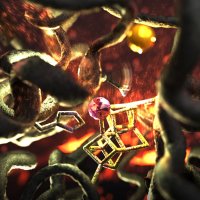
    Microbes are amazing chemists, performing reactions to recycle biological matter, depolluting environments, and contributing to Earth´s biogeochemical cycles. Among them are anaerobic methanotrophs, microbes that consume methane in oxygen-free environments. By preventing the release of this potent greenhouse gas into the atmosphere, they play an important role in mitigating climate change. However, studying the chemical reactions that these microbes carry out is challenging: They cannot be (…)
  • Fibril Structure of Desiccation-Protective Tardigrade Protein CAHS-8 : Key to its stress resistance?

    Highlights

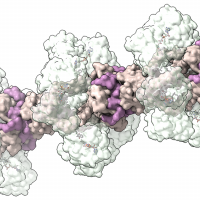
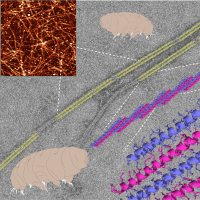
    Tardigrades are microscopic aquatic animals that exhibit remarkable resistance to environmental stress, including radiation, cryogenic temperatures and desiccation. Although the origins of this extremotolerance are poorly understood, intrinsically disordered proteins are known to play a crucial role, allowing tardigrades to survive in a dormant state for long periods of time (years), and to function normally upon return to ambient conditions. Researchers from the Protein Dynamics and (…)
  • Filming a vitamin B12 photoreceptor in action

    Highlights

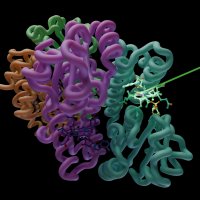
    Ten years ago, it came as a surprise that vitamin B12 derivatives have been repurposed for light detection by a large family of previously unknown photoreceptors in bacteria, which perform various functions. A prototype vitamin B12 photoreceptor, CarH, regulates the expression of genes involved in protecting bacteria from excessive sunlight. It does so by binding to DNA in the dark, acting as a molecular stopper. When exposed to light, its tetrameric architecture breaks down, enabling (…)
  • Understanding how chondroitin sulfate is synthesized by human cells

    Highlights

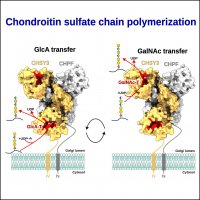
    Chondroitin sulfate (CS) is a long, highly sulfated polysaccharide found at the cell surface and in the extracellular matrix. CS plays important roles in numerous biological processes, including cell signaling and morphogenesis. The chain elongation step, during which the long polysaccharide backbone is generated, is a critical step in CS biosynthesis. Four chondroitin sulfate synthase proteins (CHSY1, CHSY3, CHPF, and CHPF2) have been previously identified in humans. However, their (…)
  • Irina Gutsche, recipient of the 2025 FRM Jacques Piraud Prize de la FRM

    Highlights

    Irina Gutsche, research director at the CNRS and group leader at the IBS, has been awarded the Jacques Piraud Prize by the Fondation de la Recherche Médicale (FRM) for her work in advanced electron microscopy aimed at deciphering fundamental biological mechanisms and opening up new therapeutic perspectives. To know more more about the 2025 Jacques Piraud Prize from the FRM and I. Gutsche’s research work
  • Congratulations to Rebekka Wild, 2025 Paoletti Price

    Highlights

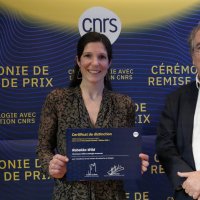
    Rebekka Wild, CNRS research fellow and team leader at IBS, received the Paoletti Prize 2025 for her work on understanding glycosaminoglycans at the molecular level. Learn more about the 2025 Paoletti Prize and its winner.
  • A dynamic molecular structure paves the way for sustainable crops capable of fixing their own nitrogen

    Highlights

    Atmospheric nitrogen (N2) is, for the most part, an inert gas for living beings on Earth. That is, we cannot directly utilize this vital compound. Therefore, the biochemical nitrogen cycle, and especially the role played by bacteria and plants, is essential to sustaining life on our planet. In some microorganisms, a process known as biological nitrogen fixation occurs, in which nitrogenases, oxygen-sensitive proteins, transform atmospheric nitrogen into forms usable for life. To function, (…)